Neighborhoods · Making · Place
Creative districts & art spaces
Art lives in more places than exhibition halls. Studios, project rooms, workshops and cultural centers help shape the character of a neighborhood.
Explore with curiosity and respect for the people who live and work there.
Explore city guides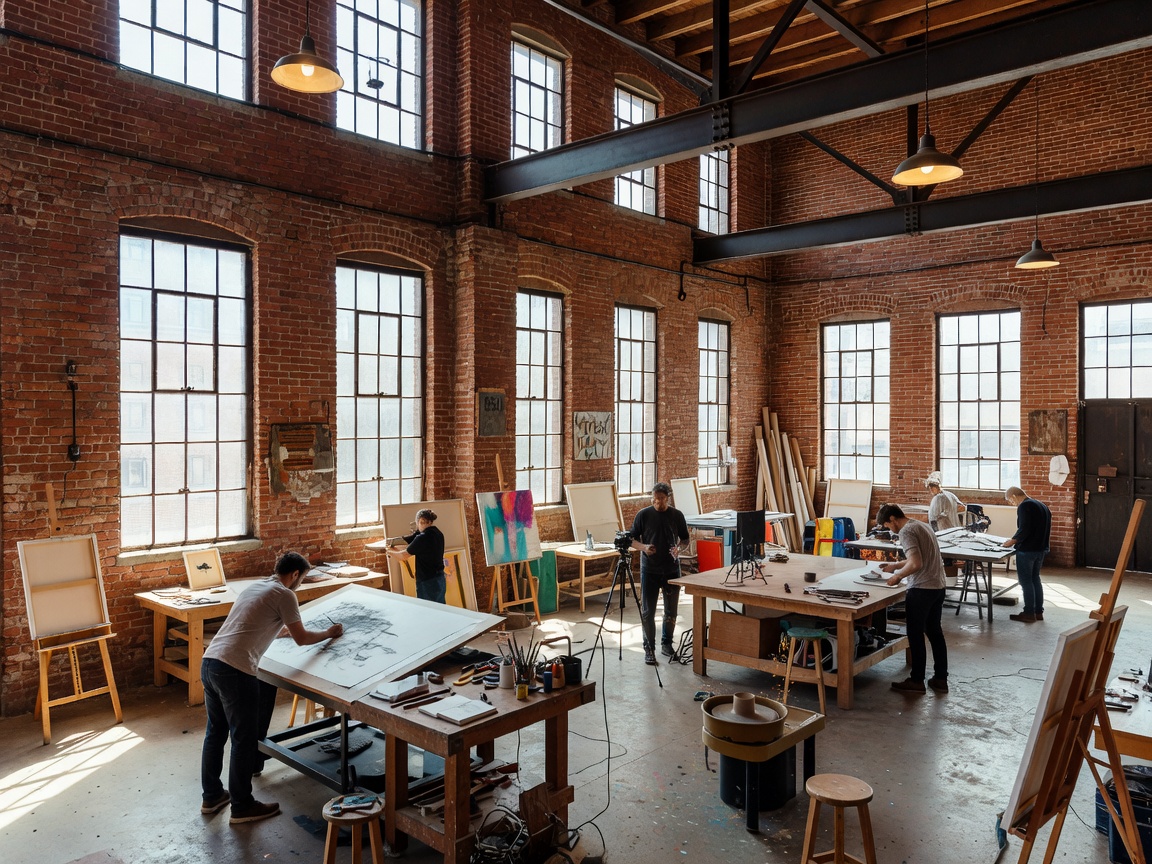
Culture beyond the institution
What makes a creative district?
A creative district is not just a cluster of attractive buildings or a label on a map. It is a place where cultural activity takes shape through people, working spaces, institutions, community relationships and local history. Depending on the city, you might encounter artist studios, independent galleries, rehearsal rooms, print workshops, design studios, bookshops, cultural centers and public art.
Some spaces welcome visitors regularly; others are working environments with limited access or private tenants. A visible studio window does not necessarily mean the public can enter. Check each venue’s own visitor information and follow signs, booking requirements and staff guidance.
Adaptive reuse and the life of a building
Former factories, warehouses and other industrial buildings can be adapted for cultural use. Their scale, materials and traces of earlier activity may influence how art is made and displayed. Adaptive reuse can give a structure a new purpose, but a building’s history and its present-day community deserve attention beyond its visual appeal.
Creative spaces also emerge in ordinary streets, storefronts and shared facilities. Not every district has a single center, and cultural activity can move as rents, ownership and local priorities change. Treat neighborhood descriptions as a starting point, not a promise that a particular venue is open or still operating.
Visit as a guest
Plan around confirmed public venues and events rather than wandering into private courtyards or workplaces. Be mindful when photographing people, homes and work in progress. Ask before taking pictures where guidance is unclear. Keep noise and disruption low, especially in residential streets, and support open venues in ways that suit your visit—whether by attending a program, buying a publication or simply engaging respectfully.
A neighborhood is not a backdrop designed for visitors. It is lived-in, and cultural spaces are part of a wider social and economic landscape. Consider who the area serves, whose histories are represented and how local voices describe change.
Build a route that leaves room
- Check access in advance: smaller organizations may have limited hours, appointments or event-based openings.
- Group nearby stops: walking between venues can reveal useful context, but account for distance and accessibility.
- Look for public programming: talks, workshops and open studios can provide a more direct introduction to a place.
- Stay flexible: venues, schedules and neighborhood conditions change; verify information close to your visit.
Good for
Visitors interested in how art is made can look for open studios, workshops and artist-led programs. Architecture enthusiasts can compare a repurposed building with a purpose-built cultural venue. Repeat travelers might return to one area over time and notice how its spaces and uses evolve.
Choose a few confirmed destinations and leave time to pay attention to the wider setting. A considerate visit recognizes that creative districts are communities first and visitor experiences second.
A respectful route
Look, listen, and leave room
Use these prompts to make a visit attentive to both creative work and neighborhood life.
Before you go
- Confirm public hours, booking details and event dates.
- Check transport, step-free access and nearby rest options.
- Learn whether a space is a gallery, studio, workshop or shared venue.
While you are there
- Respect private and working areas.
- Ask before photographing people or work in progress.
- Be considerate of residents, staff and other visitors.